Best neighborhoods in Charleston for plumbing maintenance
The Charleston neighborhoods where plumbing maintenance pays off fastest - from downtown's 1800s cast iron to West Ashley's slab leaks and Mount Pleasant's hard water.
The Charleston neighborhoods that need plumbing maintenance most are the ones with the oldest pipe and the hardest water: downtown's historic district, West Ashley's 1960s ranches, and Mount Pleasant's fast-built subdivisions. Those three areas generate the majority of the repair calls we run every week.
Plumbing maintenance in Charleston neighborhoods is scheduled service - flushing, inspecting, and tuning the parts of your system you can't see - that catches failures before they turn into water damage. Below, we break down which areas pay off fastest, what each one actually needs, and how often to do it.
What makes a Charleston neighborhood a plumbing maintenance priority
Three things drive plumbing maintenance needs in Charleston: pipe age, water chemistry, and soil movement. Any neighborhood with two of those working against it lands on our priority list.
Pipe age is the big one. Downtown's housing stock runs from the 1740s through the 1920s, and a lot of it still has original cast iron drain lines or galvanized steel supply lines. Cast iron lasts 50 to 75 years before it starts scaling shut. Galvanized steel lasts 40 to 60. Both are well past their service life in most of the peninsula.
Water chemistry matters too. Charleston's municipal water runs moderately hard - roughly 7 to 10 grains per gallon depending on the source - which builds scale inside water heaters, tankless coils, and faucet cartridges. Scale cuts flow, raises energy bills, and shortens equipment life.
Soil movement is the third factor. The Lowcountry's clay-and-sand mix swells when wet and shrinks when dry, and that cycle flexes buried pipes. Tree roots - live oak, magnolia, crape myrtle - find any crack in a sewer line within a season.
If you want a baseline inspection before committing to a schedule, our team handles plumbing charleston SC homeowners call about most - leak checks, drain inspections, and water heater tune-ups - and we'll tell you honestly whether your address needs annual service or every other year.
Downtown Charleston: the highest-maintenance plumbing in the city
Downtown Charleston - the French Quarter, South of Broad, Harleston Village, Cannonborough-Elliotborough, and the East Side - has the highest plumbing maintenance needs of any neighborhood in the city. The combination of 100-plus-year-old pipe, historic masonry, and salt air is unforgiving.
What we see on the peninsula
- Cast iron drain lines scaled to 40-60% of original diameter, causing slow drains that no plunger fixes
- Galvanized supply lines with pinhole leaks behind plaster walls
- Original clay sewer laterals cracked by oak roots
- Water heaters tucked into closets with no pan and no shutoff
Aging cast iron is the single most common problem. We run a camera down the line, and if scale is past about 50%, we recommend sewer line cleaning charleston SC with a hydro jetter rather than repeated snaking. Jetting scours the scale off the pipe wall; snaking just pokes a hole through it.
For supply lines, galvanized steel that's still in service past 60 years is a leak waiting to happen. We usually find the first pinhole in a ceiling stain. A whole-home repiping charleston SC project replaces the galvanized runs with PEX or copper, and on a typical peninsula single house that runs $6,500 to $14,000 in 2026 depending on square footage and how much plaster has to come out.
Annual maintenance downtown means: camera inspection of the main drain, water heater flush and anode check, shutoff valve exercise, and a supply-line pressure test. Budget $250 to $450 for the visit.
West Ashley: slab leaks, tree roots, and 1960s supply lines
West Ashley's ranch homes - built mostly between 1955 and 1975 in neighborhoods like Byrnes Downs, Windermere, and Sandhurst - sit on concrete slabs, and that's where the trouble hides. A supply line under a slab can leak for months before you notice.
The signs are specific: a water bill that jumps 20-30% with no change in use, a warm spot on the floor, or the sound of running water when every fixture is off. We use acoustic listening equipment and thermal imaging to pinpoint the leak without breaking concrete, then repair the line through the smallest possible access point.
Tree roots are the other West Ashley staple. The neighborhood's mature canopy is beautiful, but roots travel 30 to 50 feet looking for moisture, and a sewer lateral joint is a magnet. If your drains gurgle or back up every few months, that's root intrusion, not a one-time clog. We handle plumbing repairs charleston SC on those laterals regularly, and the fix is usually a spot repair or a liner rather than a full dig.
Annual maintenance in West Ashley: water pressure check, slab leak screening, sewer camera, and water heater service. Every 12 months is right for slab homes over 40 years old.
Mount Pleasant: hard water and fast-growing subdivisions
Mount Pleasant homes are newer - most of the housing stock went up after 1990 - but hard water and rapid construction create their own maintenance pattern. Plumbing maintenance Mount Pleasant Charleston SC homeowners need is less about pipe age and more about scale and pressure.
Water heaters here fail early. A tank that should last 10 to 12 years often gives out at 7 or 8 because scale builds on the bottom of the tank and overheats the steel. Flushing the tank once a year removes that sediment and gets you the full service life back.
We also see high incoming pressure in some subdivisions - 90 to 110 PSI at the hose bib - which stresses supply lines, toilet fill valves, and appliance connectors. A pressure-reducing valve set to 60 PSI solves it for about $350 to $600 installed.
If you're tired of scale on every fixture and spotty dishes, a water softener installation charleston SC is the long-term answer. Most Mount Pleasant homes we install in run $1,800 to $3,500 for the unit and labor, and the difference in water heater life alone usually pays it back.
Annual maintenance in Mount Pleasant: water heater flush, pressure test, softener service if you have one, and a fixture-by-fixture scale check.
James Island, Johns Island, and North Charleston
James Island mixes 1970s ranches with newer builds, so you get both slab leak risk and modern PEX. The older streets off Folly Road are the ones that need annual attention; newer construction can go every other year.
Johns Island is the well-and-septic belt for a lot of addresses. If you're on a private well, your water chemistry is your own - iron, sulfur, and hardness vary street to street. Test the water annually, and service the pressure tank and well pump on the manufacturer's schedule. Septic systems need pumping every 3 to 5 years, and that's separate from your plumbing maintenance.
North Charleston has the widest range: 1950s mill housing in Park Circle, 1980s apartments, and brand-new builds near the airport. Park Circle's older homes need the same camera-and-flush routine as West Ashley. The newer stuff mostly needs water heater and pressure checks.
If you're not sure which category your address falls into, we serve residential plumbing charleston SC across all of these areas and we'll tell you straight whether you're on an annual or biennial schedule.
How often should plumbing be maintained in Charleston?
Annual plumbing maintenance is the right schedule for any Charleston home over 30 years old, any home on a slab, and any home with a tank water heater. Newer homes on crawl spaces with tankless heaters can stretch to every 18 to 24 months.
Here's the breakdown we give customers:
- Downtown historic homes: every 12 months, camera inspection included
- West Ashley slab homes (pre-1980): every 12 months
- Mount Pleasant (post-1990): every 12-18 months, water heater flush annually
- New construction (under 10 years): every 24 months
- Well and septic properties: annual water test, septic pumped every 3-5 years
The cost of an annual maintenance visit runs $200 to $450 depending on what's included. A single emergency repair - burst pipe, sewer backup, failed water heater - runs $600 to $3,500. The math isn't close.
What plumbing maintenance is needed in older Charleston homes?
Older Charleston homes need four things every year: a drain camera inspection, a water heater flush and anode rod check, a supply-line pressure test, and a shutoff valve exercise. Skip any of those and you're gambling on the fifth thing - the leak you don't find until it's in the ceiling.
The drain camera is non-negotiable on pre-1950 homes. Cast iron and clay laterals fail from the inside, and you can't see it from a fixture. The camera shows scale, cracks, root intrusion, and bellies in the line.
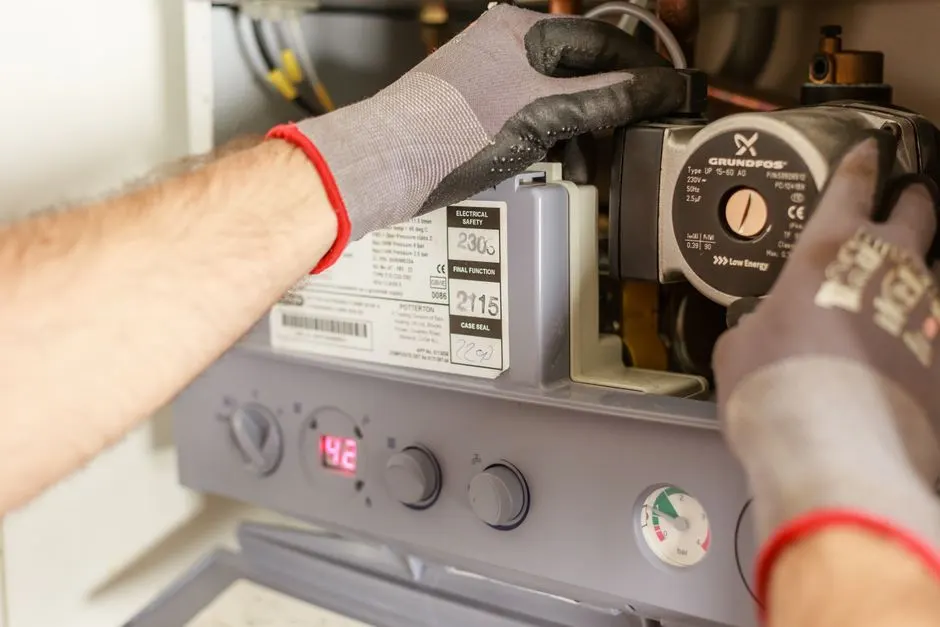
The water heater flush removes sediment that shortens tank life. While we're there, we check the anode rod - a $30 part that protects the tank from corrosion. Replacing it at year 5 or 6 can double the life of the heater. Our water heater maintenance charleston SC visits include both.
The pressure test catches hidden supply leaks before they show as a stain. And exercising the shutoff valves - main and fixture - means they'll actually close when you need them to. A stuck gate valve during a burst pipe turns a $400 repair into a $4,000 one.
What to watch out for
Most of the plumbing failures we see in Charleston were visible weeks earlier. Here's what to catch:
- Water bill creep. A 15% jump with no change in habits usually means a hidden leak - often under a slab or in an irrigation line.
- Slow drains in more than one fixture. One slow sink is a local clog. Three slow drains means the main line is restricted.
- Gurgling toilets or tubs. That's air being pulled through a partially blocked vent or drain - a root or scale problem upstream.
- Rusty or metallic-tasting water. Usually a failing water heater anode or corroding galvanized supply pipe.
- Warm spots on a slab floor. Hot-water slab leak. Call the same day.
- Water heater age past 10 years. Start budgeting for replacement, not repair.
The mistake we see most is waiting. A $250 camera inspection that finds a cracked lateral becomes a $6,000 excavation if you wait until the yard is soggy. The second most common mistake is snaking a line that needs jetting - you clear a channel through the scale, and it closes back up in 60 days.
When to call a professional
Call us when you see any of the warning signs above, when your water heater passes 10 years old, or when you've owned a Charleston home for more than two years without a plumbing inspection. Those are the three triggers that matter.
Charleston Harborline Plumbing runs maintenance visits across downtown, West Ashley, Mount Pleasant, James Island, Johns Island, and North Charleston. We'll inspect the system, show you what we find, and give you a flat price before any work starts. If your home doesn't need annual service, we'll tell you that too.
Frequently Asked Questions
Which Charleston neighborhoods need plumbing maintenance most?
Downtown Charleston, West Ashley, and Mount Pleasant top the list. Downtown and West Ashley have the oldest pipe - much of it past its service life - while Mount Pleasant deals with hard water and high pressure. Those three areas account for most of our annual maintenance visits.
How often should plumbing be maintained in Charleston?
Every 12 months for homes over 30 years old, slab homes, and any home with a tank water heater. Newer homes on crawl spaces with tankless heaters can go 18 to 24 months. Annual visits run $200 to $450.
Do you serve all Charleston neighborhoods?
Yes - we cover downtown, West Ashley, Mount Pleasant, James Island, Johns Island, North Charleston, and the surrounding Lowcountry. If you're inside the Charleston metro, we can schedule a maintenance visit.
What plumbing maintenance is needed in older Charleston homes?
Four things every year: a drain camera inspection of the main line, a water heater flush and anode rod check, a supply-line pressure test, and exercising all shutoff valves. On pre-1950 homes, the camera inspection is the most important item.
How much does plumbing maintenance cost in Charleston?
A standard annual maintenance visit runs $200 to $450 in 2026, depending on what's included. Adding a camera inspection or water heater service pushes toward the top of that range. Emergency repairs run $600 to $3,500.
Get help with plumbing in Charleston
Whether you're in a 1900s peninsula single house or a 2015 Mount Pleasant build, an annual maintenance visit is the cheapest insurance your plumbing gets. We'll inspect the whole system, fix what's failing, and leave you with a written record of what we found.
Call Charleston Harborline Plumbing at (854) 226-6111 to schedule plumbing maintenance at your Charleston address.