Why Is My Water Heater Leaking From the Bottom?
A puddle under your tank usually means one of five things. Here's how Charleston homeowners tell a $180 fix from a full replacement.
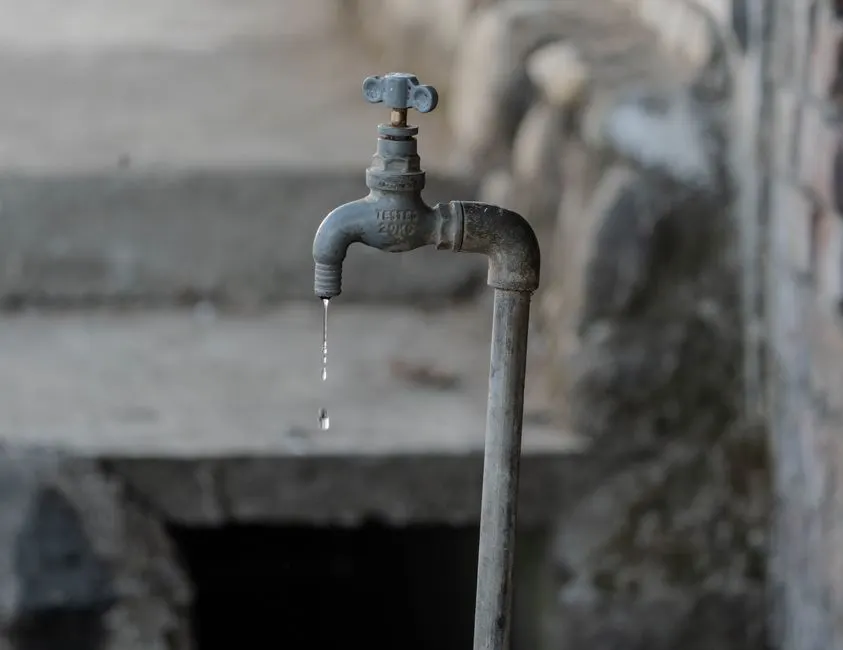
A water heater leaking from the bottom almost always means the tank itself has failed, the drain valve is passing, or a fitting above the tank is dripping down the shell and pooling underneath. Of those three, only a failed tank is a death sentence - the other two are repairs. If the water is rusty and the tank is more than eight years old, plan on replacement. If the water is clear and the tank is young, we can usually fix it the same day.
This guide walks through how to tell those cases apart in about five minutes, what a water heater bottom leak repair costs in Charleston in 2026, and the point where patching stops making sense.
The Short Answer: Where the Water Is Actually Coming From
A water heater leaking from bottom Charleston SC homeowners describe is rarely leaking from the bottom at all - water almost always starts higher up and runs down. The steel shell of a tank is wrapped in insulation, and that insulation acts like a wick. A drip from the T&P valve, the inlet nipple, or a union 18 inches above the floor will show up as a puddle at the base within an hour.
That is why the first step is never to assume the worst. It is to dry the tank completely, wait 20 minutes, and watch where the first bead of water appears. Where it starts is where the problem is.
Water heater leaking from the bottom is a plumbing symptom - not a diagnosis - that points to one of five sources: a corroded tank interior, a failed drain valve, a loose or cracked fitting, a dripping temperature-and-pressure relief valve, or condensation on a gas unit during a long draw. Four of those five are repairable. One is not.
Why Is My Water Heater Leaking From the Bottom in Charleston SC?
Charleston water is moderately hard, averaging roughly 6 to 8 grains per gallon depending on whether you are on Charleston Water System or a Berkeley County well. That mineral load is the single biggest reason tank water heaters here fail earlier than the national average. Scale settles on the bottom of the tank, insulates the burner from the water, overheats the steel, and accelerates corrosion from the inside out.
Here are the five causes we find most often, in order of frequency.
1. Internal tank corrosion (the terminal one)
Every tank-style heater has a glass-lined steel interior and a sacrificial anode rod that corrodes so the tank does not. Once that anode is consumed - usually 4 to 6 years in Charleston's water - the lining starts to pit. Rust-colored water and a leak at the very bottom seam are the tell. A corroded tank cannot be repaired. No epoxy, no patch kit, no welder will hold pressure on a compromised tank wall.
2. A failed drain valve
The plastic drain valve at the bottom of the tank is the cheapest part on the whole unit and the one most likely to drip. Sediment collects against the seal, the plastic threads crack, and you get a slow weep that looks exactly like a tank failure. This is a $15 part and about an hour of labor. It is the best-case scenario.
3. A loose fitting or cracked nipple
The cold inlet and hot outlet nipples on top of the tank thread into dielectric unions. Charleston's temperature swings - 40s in January, 95 in July - expand and contract those joints all year. A quarter-turn on a union nut fixes it. A cracked nipple needs replacement, but the tank stays.
4. T&P relief valve discharge
The temperature-and-pressure relief valve opens at 150 PSI or 210°F. If it is weeping, either the valve has failed or the tank is genuinely over-pressurizing. On a closed system with a bad thermal expansion tank, pressure spikes every time the burner fires. That is a $40 valve plus a $120 expansion tank - and it protects the tank from a much more expensive failure.
5. Condensation on a gas unit
During a long hot-water draw in a cold garage, gas water heaters can sweat. The water is clear, it appears only during use, and it disappears when the tank warms. If that matches what you are seeing, you do not have a leak at all.
How to Tell a Tank Leak From a Fitting Leak in Five Minutes
You can narrow this down yourself before anyone touches a wrench. Do this in order:
- Shut off the gas or breaker at the unit, and close the cold-water shutoff valve on the inlet line.
- Dry the tank and the floor with a towel. Get the shell completely dry, top to bottom.
- Wrap a dry paper towel around each fitting on top - inlet, outlet, T&P valve.
- Wait 20 minutes. Do not run any hot water.
- Check the paper towels first, then the base. If a towel is wet, the leak is above. If the towels are dry and water is reappearing at the base seam, the tank is the source.
One more test: look at the water color. Clear water points to a fitting or valve. Rusty or metallic-smelling water points to the tank interior, and that is the one that ends in replacement.
If you would rather not crawl around a wet garage floor, our team handles leak detection and repair charleston SC with moisture meters and pressure testing, so we can confirm the source before we quote anything.
What a Water Heater Bottom Leak Costs in Charleston in 2026
Typical 2026 pricing in the Charleston area breaks down like this. These are installed-and-done numbers, not parts-counter estimates.
- Drain valve replacement: $150-$280
- Fitting or nipple repair: $180-$350
- T&P valve replacement: $180-$300
- Thermal expansion tank added: $250-$450
- 40-50 gallon tank replacement, installed: $1,400-$2,400
- Tankless replacement, installed: $3,200-$5,500
The gap between a $200 valve and a $2,000 tank is the whole reason we diagnose before we quote. Roughly a third of the "leaking water heaters" we get called out to in Charleston turn out to be a fitting or valve, not a tank.
If the tank is the problem, replacement is the move - and we handle water heater replacement charleston SC with haul-away of the old unit and a new expansion tank included. Most swaps are done in three to four hours.
Repair or Replace? The 8-Year Rule
If your tank is under 8 years old and the leak is at a valve or fitting, repair it. If it is over 8 years old and leaking from the tank seam, replace it. That is the rule, and it holds about 90% of the time.
Three details push the decision either way:
- Age of the anode rod. If it has never been changed and the tank is 6+ years old, the interior is already compromised.
- Water color. Rusty hot water means the lining is gone. Repair is throwing money at a dead tank.
- Where the water appears. Base seam = replace. Anywhere above = repair.
One thing worth knowing: a leaking tank does not fail gradually forever. Once the lining is compromised, the tank is running on borrowed time, and a full rupture can dump 40 to 50 gallons into a garage, closet, or hallway in under 10 minutes. If your heater sits in a finished space or above a second floor, that is a five-figure water-damage claim waiting to happen.
We also see this pattern constantly in the older housing stock around residential plumbing charleston SC - 1970s and 1980s homes with heaters in interior closets and no drain pan, where a slow leak soaks drywall for weeks before anyone notices.
Common Mistakes Charleston Homeowners Make With a Leaking Water Heater
The wrong move here costs real money. These are the ones we see most.
- Ignoring it because it is "just a little water." A slow tank leak becomes a flood without warning. There is no slow-motion phase at the end.
- Slapping epoxy or sealant on the tank. It will hold for a week and then let go at 2 a.m. Tank sealants do not survive 150°F water and 60 PSI.
- Turning the temperature up to "compensate." Higher temperature means higher pressure and faster corrosion. It makes the leak worse.
- Replacing the heater without checking the anode rod on the new one. A $30 anode swap every 4 to 5 years is the cheapest way to double a tank's lifespan in Charleston water.
- Skipping the drain pan and expansion tank. Both are code-required in most new installs and both are cheap insurance.
If you want the leak stopped and the tank protected going forward, our water heater repair charleston SC service covers valves, fittings, T&P assemblies, and expansion tanks - and we will tell you straight if the tank is past saving.
When to Call a Professional
Call a licensed plumber the moment you see water at the base of the tank and cannot identify the source within 20 minutes. Gas connections, T&P valves, and pressure issues are not DIY territory - a mis-set relief valve is how tanks become projectiles.
Call immediately if any of these are true:
- Water is actively running, not just weeping
- The tank is over 8 years old
- You smell gas near the unit
- The heater sits in a closet, attic, or above a finished floor
- The breaker trips when the unit runs
Charleston Harborline Plumbing handles water heater diagnostics and repair across the Charleston area. We find the leak, fix what is fixable, and tell you plainly when replacement is the better call - with upfront pricing before we start.
Frequently Asked Questions
Why is my water heater leaking from the bottom in Charleston?
In Charleston, the most common cause is internal tank corrosion driven by hard water and a spent anode rod. The other four causes - drain valve failure, loose fittings, a weeping T&P valve, and condensation - are all repairable. Rusty water at the base means the tank is done.
Can a leaking water heater be repaired in Charleston SC?
Yes, if the leak is at a valve, fitting, or T&P assembly. Those repairs run $150-$350 and take one to two hours. A leak from the tank seam itself cannot be repaired - the tank has to be replaced, typically $1,400-$2,400 installed.
How much does it cost to fix a leaking water heater in Charleston?
Most valve and fitting repairs fall between $150 and $350 in 2026. If the tank is the source, replacement runs $1,400-$2,400 for a standard 40-50 gallon unit, or $3,200-$5,500 for tankless. We quote before any work begins.
Should I replace my water heater if it leaks in Charleston?
Replace it if the tank is over 8 years old, the water is rusty, or the leak is at the base seam. Repair it if the tank is younger and the leak is at a valve or fitting. Age plus rusty water is the clearest replace signal.
Is a leaking water heater an emergency?
An active running leak is - shut off the water and gas or power, then call. A slow weep gives you a day or two, but do not wait longer. A compromised tank can rupture and release 40-50 gallons in minutes.
Get Help With Plumbing in Charleston
A wet floor under the tank is not something to watch for another week. We will diagnose it, tell you whether it is a $200 fix or a replacement, and get your hot water back the same day in most cases.
Call Charleston Harborline Plumbing at (854) 226-6111 for water heater repair and replacement across Charleston.